Published: 10 February 2026
Why discounted Eskom tariffs buy time and wheeling levels the playing field
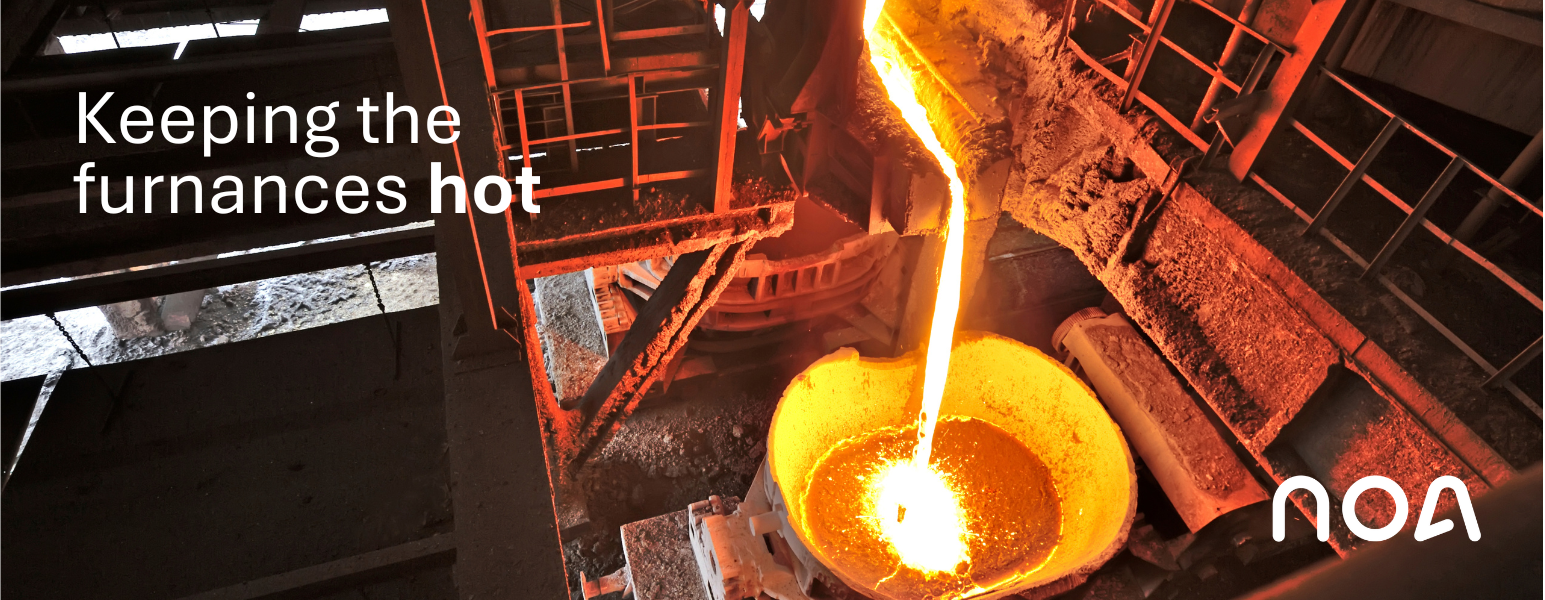
Energy-intensive industries such as ferrochrome, manganese and silicon metals have faced years of rising electricity costs, operational uncertainty and declining global competitiveness. Recent electricity tariff relief offered by Eskom is therefore welcome: it protects strategic industries, safeguards jobs and keeps furnaces running at a time when closures would be costly, and in some cases irreversible.
Reuters reports that South Africa, the world’s largest chrome ore producer, has already lost its position as the leading processor of chrome into ferrochrome to China, largely because of high electricity costs. Smelters combine chromium and iron to produce ferrochrome, a critical input into stainless steel and other alloys. When electricity becomes uncompetitive, beneficiation collapses, even where raw material advantages remain.
Tariff relief, however, is by definition temporary. The more sustainable solution lies in broadening customer choice through market liberalisation, wheeling and energy aggregation – allowing smelters to remain operational, while positioning themselves for a structurally lower-cost energy future. This is where aggregators such as NOA play a critical role.
Eskom’s discounted tariffs: necessary, targeted and time-bound
More than a dozen smelters have shut down in South Africa in recent years, leading to thousands of job losses. Electricity costs have increased by more than 900% since 2008, fundamentally undermining smelter economics. Late last year, Samancor Chrome and the Glencore-Merafe joint venture initiated processes to shut down furnaces and retrench workers, citing viability challenges driven largely by power prices.
In January 2026, South Africa’s energy regulator approved temporary electricity tariff relief for major ferrochrome producers. Media reports confirmed an interim tariff of 87.74c/kWh for qualifying operations.
It appears that the relief is (a) temporary, not a permanent industrial tariff (b) targeted at smelters under acute pressure and (c) that government support is involved to prevent costs being fully socialised across other electricity users.
The intent seems to be to buy time, not to create a long-term pricing regime that underpins a sustainable business model.
Why market liberalisation, not subsidies, level the playing field
Eskom’s supply availability has improved over the past two years, partly because the private sector has invested heavily in behind-the-meter rooftop solar. Embedded generation has reduced daytime grid demand, improving system adequacy and giving Eskom space to stabilise operations, a positive development. Data from early 2026 shows Eskom’s operating reserve margin, the amount of capacity available above peak demand, ranged from roughly 48% to over 70%, well above the idaal 15–25% level, and resulted in more than 15 000 MW of dispatchable capacity (equal to more than three Kusile or Medupi power stations) sitting unused due to lower residual demand.
This additional private-sector generation, together with declining industrial demand, has contributed to an oversupply of peak and off-peak energy relative to historical levels. At the same time, Eskom’s total electricity sales have declined year-on-year as residents and businesses install their own generation and sign private power contracts. This creates a structural challenge: as major users such as smelters exit or reduce grid consumption because tariffs and reliability issues make self-generation or alternative procurement more attractive, Eskom’s revenue base shrinks. That in turn puts pressure on tariffs and prospects for investment in new capacity or maintenance, reinforcing a cycle where fewer high-value customers on the grid can lead to further economic stress for the utility and those who remain dependent on it.
Eskom tariffs will continue to rise over time because they are driven by input costs (fuel, maintenance, labour and debt servicing), and in the next 5 years Eskom has, under multiple international accords and conventions, committed to retiring their coal generation fleet. New generation capacity will be needed, even under modest to flat economic growth forecast scenarios. Renewable energy follows a different trajectory to coal or expensive imported natural gas: it is technology-driven, with costs declining as equipment and technology efficiencies improve, scale and financing increases.
While public reporting does not disclose full contractual detail of the reduced tariffs, full transparency on tariff inclusions and exclusions would assist with comparing Eskom supply to alternative procurement options on a true like-for-like basis. At present, Eskom is the only participant able to levy generator capacity charges; bundle energy, capacity and network components into a single offer; and provide selective pricing relief outside a fully competitive market with scant detail on how these concessionary tariffs will be socialised. Independent generators and aggregators cannot yet compete on fully equivalent terms because parts of the tariff framework remain closed. This difference in cost dynamics is central to the long-term competitiveness debate. The liberalisation of the energy market will only assist in facilitating this competitiveness.
Why wheeling makes sense for smelters
“But the sun isn’t always shining, and the wind isn’t always blowing”. How will renewables power these baseload demands?
Smelters operate 24/7 and require stable, consistent baseload power. Wheeling and aggregation increasingly offer a resilient alternative. By aggregating power from technologically and geographically diverse fleet of generation facilities, significantly higher renewable energy penetration becomes possible – augmented by battery energy storage systems to reliably deliver a clean baseload solution. Given that the technology is getting cheaper, it won’t be long before this equivalent pricing begins to match and better the offers made to our smelters.
Procuring energy through NOA allows smelters to avoid reliance on a single technology or asset, where energy is aggregated from various geographies and energy sources to provide a reliable, competitively priced solution.
“For energy-intensive industries, competitiveness ultimately comes down to delivered electricity cost over time, not only short-term relief,” says Karel Cornelissen, CEO of NOA Group. “Wheeling and aggregation allow smelters to lock in pricing that is increasingly competitive, while reducing long-term exposure to annual grid tariff increases. That shift is critical if South Africa wants to retain beneficiation capacity and the export revenues and jobs that come with it.”
NOA focuses on the customer’s total electricity cost, not just a headline c/kWh price. Internal NOA modelling indicates that within 18–24 months, wheeled, aggregated energy can compete with discounted Eskom tariffs on a like-for-like basis. Two years of stability is arguably a long enough runway for many smelters to transition from reliance on special pricing to structural competitiveness and provide the breathing space for additional renewable energy capacity, grid and transmission infrastructure to come online.
In the meantime, the pragmatic approach is clear: use Eskom’s discounted tariffs now to protect jobs and industrial capacity, while using this window to diversify energy procurement.
A liberalised electricity market benefits South Africa as a whole. It reduces the need for ad-hoc industrial subsidies, attracts private capital into generation, lowers systemic energy risk and supports export-oriented industries through truly competitive, green electricity.
Temporary relief keeps the lights on. Choice and competition keep the economy moving and stimulates innovation.
About the authors:
Matt Fannin is a Commercial Lead at NOA and a registered professional engineer, focused on originating and developing energy projects. With a background spanning downstream oil & gas, petrochemicals, major infrastructure delivery and management consulting, he is passionate about unlocking greater investment in energy and infrastructure across the continent.
Christine Krone is Head of Marketing at NOA, bringing more than 20 years’ experience in technical and B2B marketing across renewable energy, financial services, higher education and consulting. She is passionate about demystifying complex industries and translating technical solutions into clear, compelling customer stories that help organisations make informed energy decisions.