Published: 18 November 2026
Planning with confidence when electricity costs keep climbing
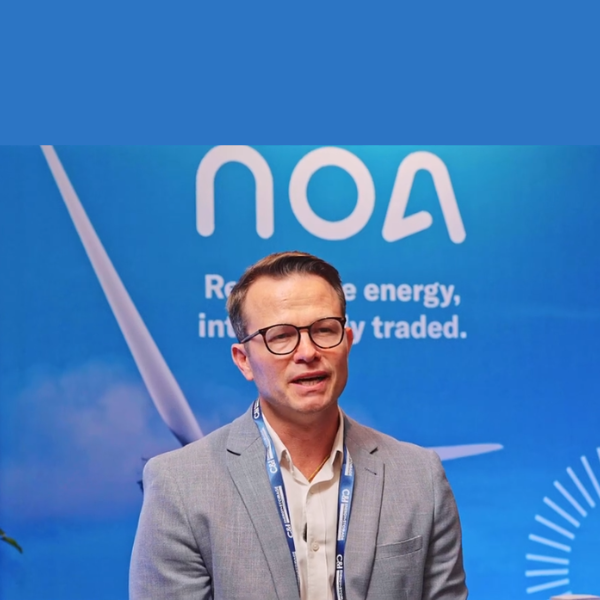
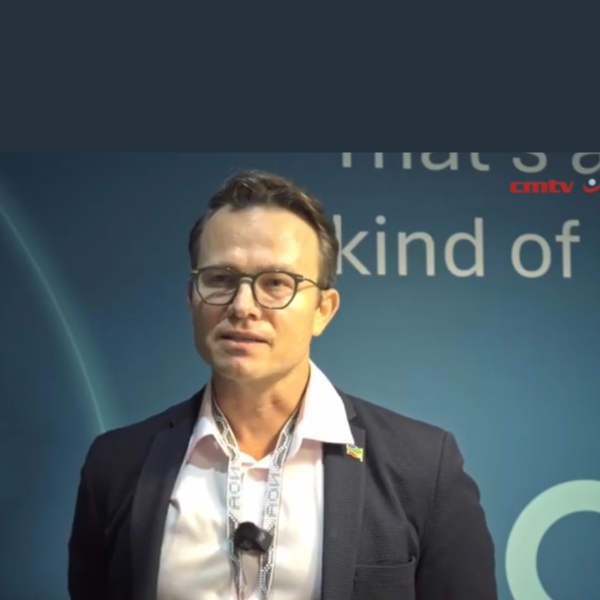
Andrew Taylor, Head of Trading at NOA, explains how long-term contracts and a diversified portfolio give energy-intensive users price path certainty
For many of South Africa’s largest businesses, electricity is no longer just a cost to manage. It is a risk to plan around. Grid-related costs have risen by more than 4.2 times over the past ten years, and for many energy-intensive users, electricity now makes up more than 30% of total input costs. With the rules on tariffs also in flux, committing to long-term growth and decarbonisation plans gets much harder.
That was the starting point for this short interview with Andrew Taylor, Head of Trading at NOA, recorded at this year’s Energy Intensive Users Group (EIUG) conference. Andrew explains what energy-intensive users are asking for and how NOA is responding.
Key points:
Regulatory uncertainty makes long-term decisions harder
Andrew is clear about the biggest challenge energy-intensive users face today: regulatory uncertainty. It shows up in the debate on tariff unbundling, which determines how much of a business’s electricity cost becomes fixed and how much stays variable. Without clarity, the businesses that form the bedrock of the economy struggle to commit to their decarbonisation strategies and to expand, which holds back the economic growth South Africa needs. Price path certainty, tailored to each customer.
NOA’s answer has two parts. First, supply is matched to each customer’s own consumption profile. Second, contracts include CPI-linked escalation provisions, which give customers a price path they can plan around. Supply agreements run from one year to 25 years.
How the model works
NOA builds, owns and operates wind, solar and energy storage facilities in different parts of the country and brings them together through NOA Trading. Each facility sits in a ring-fenced company, and NOA signs 20 or 30-year power purchase agreements (PPAs) with these independent power producers (IPPs). That gives lenders confidence that there is a solid offtaker behind each project’s revenue.
Because NOA supplies a diversified portfolio of customers, energy that one customer cannot use can be reallocated to others. This adds contracting flexibility and reduces both price path risk and the traditional risks of buying renewable energy.
Lower costs, with no balance sheet impact
Andrew gives the example of a customer he spoke to that morning, for whom energy makes up 29% of total input costs. Any reduction in that cost falls straight to the bottom line, creating room for expansion and resource efficiency. It is also not a procurement decision that impacts the customer’s balance sheet. NOA issues an allocation notice to Eskom, and the customer receives a rebate on their invoice that reflects the energy allocated to them. The customer also gets confirmation that the energy is green, which supports their decarbonisation objectives, and a discount on the network operator’s current tariffs.
A different kind of energy
Andrew also explains the thinking behind NOA’s tagline. A different kind of energy means bringing together multiple technologies and geographies, and the people who make NOA possible, both in how NOA operates and in the platform it offers customers.
If price path certainty and lower energy costs are on your agenda, we would like to talk. Get in touch with the NOA team.